
 BACK
BACK
Category
Helpful Links
- Home > Latest News > The Updated VEYLDF and Ditto’s Keep Safe Adventure Program: What Early Childhood Services Need to Know
Child safety has always mattered in early childhood education, but Victoria’s updated Early Years Learning and Development Framework (VEYLDF) 2026 has done something important. It has made that expectation explicit.
The framework now positions child safety as embedded in everyday practice, not treated as a separate process. That is a significant shift, and it has direct implications for how early childhood services plan, program and show up for children every single day.
For early childhood services across Victoria, the updated VEYLDF is a timely reminder that child safety education is not something that happens alongside quality early childhood practice. It is quality early childhood practice.
If your service is already incorporating Bravehearts’ Ditto’s Keep Safe Adventure Program (DKSA), this framework update affirms and strengthens everything you are already doing. Keep reading, because there is practical guidance here to help you embed it even more intentionally.
If you have not yet brought Ditto into your service, this is the moment to understand why it matters, what it looks like in practice, and how Bravehearts can support you to get started.
Either way, this post is for you.
Child Safety Is Now Core Business
The updated VEYLDF defines child safety as ‘actively protecting every child’s physical, emotional and cultural wellbeing’ and describes it as ‘everyone’s responsibility.’ (VEYLDF 2026, Key Terms, p.10)
It also affirms that children ‘have the right to be heard, be safe, be treated fairly and have decisions made in their best interests.’ (VEYLDF 2026, Vision, p.6)
This is the framework telling us, clearly and without ambiguity, that teaching children about personal safety is quality early childhood practice. Not a bonus. Not an optional extra. Core business.
If your service has ever questioned whether a structured children’s personal safety program fits within your educational program, the updated VEYLDF has answered that question. It does.
What to do with this: Reference Ditto’s Keep Safe Adventure Program explicitly in your Quality Improvement Plan as part of your service’s approach to child safety and wellbeing. Name it in your programming documentation with clear links to VEYLDF outcomes. Make it visible and make it intentional.
Where Ditto and the VEYLDF Speak the Same Language
Ditto’s Keep Safe Adventure Program teaches children about body autonomy, recognising unsafe situations, identifying trusted adults and speaking up when something feels wrong. When you map that against the VEYLDF’s Learning and Development Outcomes, the alignment is clear.
Outcome 1: Children Have a Strong Sense of Identity
The framework describes this outcome as evident when children ‘feel safe, secure and supported’ and ‘develop their emerging autonomy, interdependence, resilience and agency.’ (VEYLDF 2026, Outcome 1, p.36)
When a child learns through DKSA that their body belongs to them, that they have the right to say no, and that they can tell a trusted adult when something feels wrong, they are building exactly that. A confident, knowledgeable sense of self.
Outcome 3: Children Have a Strong Sense of Wellbeing
This outcome is evident when children ‘are aware of and develop strategies to support their own mental and physical health and personal safety.’ (VEYLDF 2026, Outcome 3, p.38)
That sentence could describe DKSA’s purpose directly. Teaching children to notice feelings of discomfort, trust their instincts and seek help is teaching them to protect their own wellbeing. The framework and the program are saying the same thing.
Outcome 5: Children Are Effective Communicators
One of the most powerful things Bravehearts’ program does is give children words. Correct anatomical language. Vocabulary to name what has happened or what feels wrong. The confidence to tell someone.
The VEYLDF describes effective communication as children interacting ‘verbally and non-verbally with others for a range of purposes.’ (VEYLDF 2026, Outcome 5, p.40) Personal safety communication is one of the most important purposes there is.
What to do with this: When you document children’s learning, look for evidence of DKSA’s concepts showing up in play and conversation. Are children asserting boundaries? Naming trusted adults confidently? Using body safety language? These are observable, documentable moments that belong in your planning cycle against these outcomes.
How You Deliver Ditto Matters as Much as What You Deliver
The VEYLDF’s Practice Principles describe how professionals work. Several of them have direct implications for the delivery of Ditto’s Keep Safe Adventure Program.
Relationships come first. The framework notes that warm, responsive relationships ‘act as a protective factor’ for children. (VEYLDF 2026, Principle 4, p.26) A child who trusts their educator is a child who is more likely to disclose. Ditto gives children the language. Your relationship gives them the safety to use it. Build that foundation before and during the program, not just in preparation for it.
Families are partners, not an audience. The VEYLDF is clear that families are ‘children’s first and most important teachers.’ (VEYLDF 2026, Principle 2, p.22) Personal safety education works best when it is reinforced at home. Communicate with families before the program begins. Share the included resources. Explain what children will learn and why. When families understand the program, they become active partners in keeping their child safe.
Every child. No exceptions. High expectations mean every child will learn personal safety concepts with the right support and opportunities. (VEYLDF 2026, Principle 3, p.24) Deliver Ditto universally. Plan for differentiation so children with additional needs can fully access the program. Review resources through an inclusion lens before you begin, considering children with disability, children from culturally and linguistically diverse backgrounds, and First Nations children.
Reflect before you deliver. The framework calls on professionals to recognise ‘barriers, bias or assumptions that may affect a child’s safety, access or wellbeing.’ (VEYLDF 2026, Principle 1, p.20) Before your service welcomes the program, sit with some honest questions. Are you comfortable using correct anatomical language with children? Do you know how to respond if a child discloses during a session? Is your environment genuinely safe for children to speak up? If there are gaps, address them first.
*Bravehearts’ eLearning course – Focused Learning: Self-Reflection for Educators – provides educators with the knowledge and skills required to use self-reflection as a tool to challenge personal assumptions; biases and prejudices; and social norms and stereotypes, which may negatively impact the way in which they respond to child abuse or child sexual abuse trauma.
A Note on First Nations Children and Families
The updated VEYLDF embeds First Nations perspectives more deeply than ever before. Cultural safety means recognising and protecting ‘a child’s identity, culture and ways of being.’ (VEYLDF 2026, Key Terms, p.10)
When delivering Ditto with First Nations children and families, the concept of trusted adults must be understood within the context of extended kin and community networks. Before you begin, engage with local Elders and community members. Seek guidance on how the program’s concepts can be framed in ways that are genuinely culturally safe. This is not optional. It is essential.
Be Ready Before You Begin
Delivering personal safety education can prompt children to disclose abuse or unsafe experiences. This is not something to be afraid of. It is one of the reasons this work matters.
Every educator must know their mandatory reporting obligations under Victorian law and your service’s internal procedures before the DKSA program begins. Know what to do before you need to do it.
You Do Not Have to Figure This Out Alone
Understanding the framework is one thing. Feeling genuinely confident delivering personal safety education is another. That confidence comes with knowledge, practice and support.
Whether you are ready to bring DKSA into your service for the first time or looking to strengthen how you already deliver it, Bravehearts is here to help.
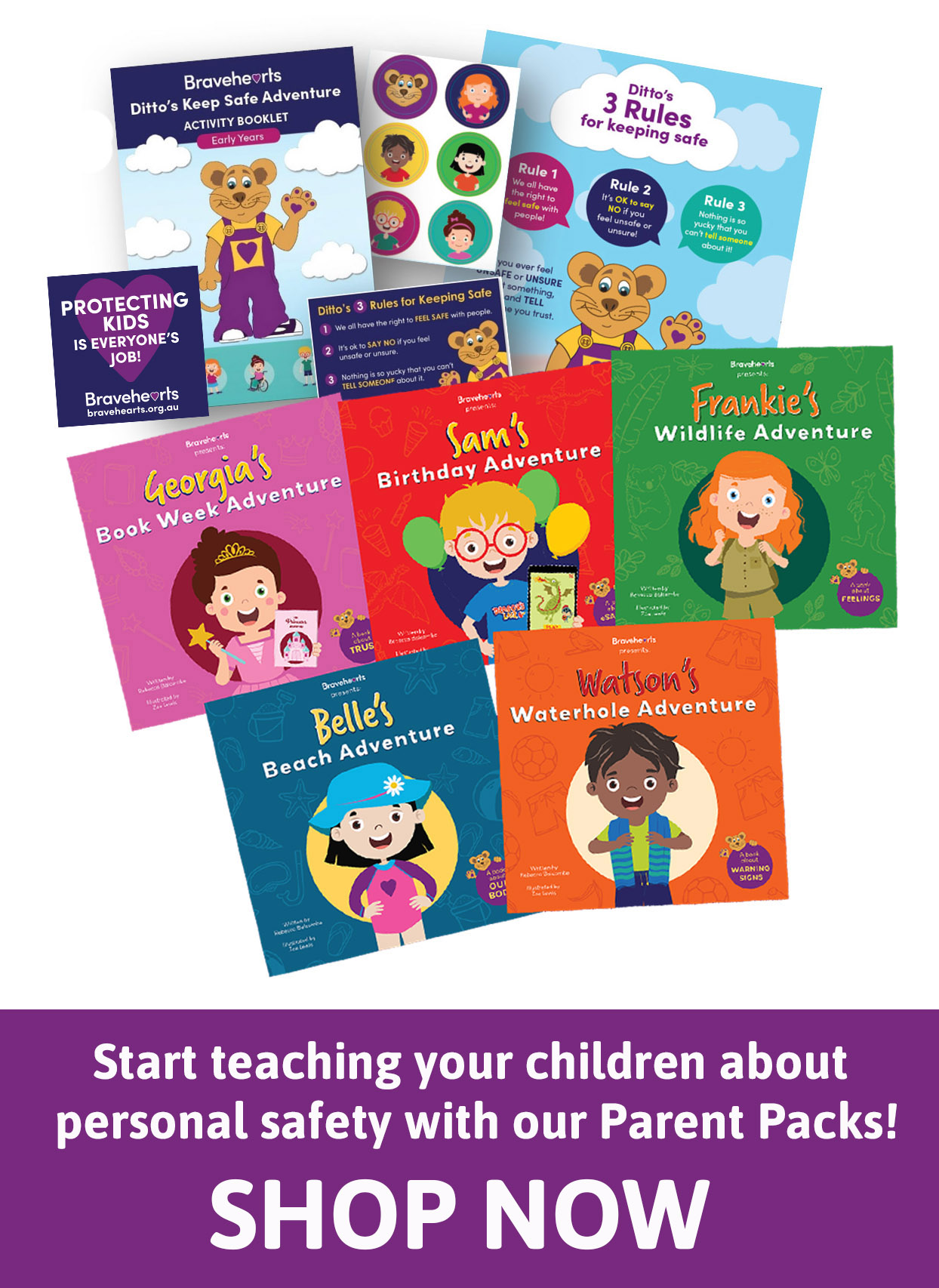
Explore Ditto’s Keep Safe Adventure Program and find out how Bravehearts can work with your service.
Build your team’s knowledge and confidence with Bravehearts’ professional eLearning courses, designed specifically for educators and early childhood leaders, at braveheartslearning.org.au.
Children are safer when the adults around them are informed, confident and working together. That is what Bravehearts’ education programs are about. That is what the VEYLDF is about. And that is what your service can be about, starting today.
All VEYLDF references are drawn from the Victorian Early Years Learning and Development Framework 2026, published by the Victorian Department of Education. Available at vic.gov.au/education.