
 BACK
BACK
Category
Helpful Links

- Home > Latest News > Ditto’s Keep Safe Adventure Program Turns 20!
Australia’s most beloved lion cub, Ditto, star of Ditto’s Keep Safe Adventure, Bravehearts’ personal safety program for young children, is celebrating a major milestone with the program turning 20!
Launched in 2006, Ditto’s Keep Safe Adventure program has empowered more than 1.6 million Australian children with personal safety skills to help safeguard against child sexual abuse.
Personal Safety: The Missing Link in Child Safety Education
When Bravehearts Ditto’s Keep Safe Adventure program first launched in 2006, the concept of personal safety education was largely unfamiliar.
General health and safety programs for children had long existed, such as healthy eating, sun safety, road and fire safety education. The closest thing to personal safety learning was the ‘stranger danger’ trope first promoted to children in the early 80s.
Missing from schools was a type of child safety education that could help protect children from sexual abuse. Through Ditto’s Keep Safe Adventure Program, Bravehearts helped bring personal safety education into the open, encouraging age-appropriate conversations about a topic that had long been considered uncomfortable to discuss. The program broadened understanding of children’s safety by highlighting that harm is more often caused by someone a child knows, rather than a stranger alone.
Fast forward two decades later and the value of teaching children and young people personal safety concepts including body ownership and consent is undeniable. Many such programs now exist in Australia and Bravehearts welcomes the way early learning centres and schools now embrace quality child protection standards as the norm.
Personal safety learnings are now built into the Australian Curriculum and consent education in high school is government mandated. These are huge strides for a society that once swept the idea of child sexual abuse under the rug.
Personal Safety Education and Prevention
Teaching children personal safety skills can help them to build confidence and resilience. Whilst the onus of protection should never be on the child, helping children to understand and identify when something doesn’t feel right or safe, and to talk to a trusted adult without fear of consequences can add a vital layer of protection around our kids.
What is Personal Safety Education?
Personal safety or protective behaviours education is based around teaching children five key principles:
- To trust their feelings and to distinguish between ‘yes’ and ‘no’ feelings.
- To say ‘no’ to adults if they feel unsafe and unsure.
- That they own their own bodies.
- That nothing is so yucky that they can’t tell someone about it.
- That if they feel unsafe or unsure to run and tell someone they trust.
Known benefits of teaching young children these essential principles include:
- Reducing the likelihood of a child entering into an unsafe situation.
- The child knowing how to respond to an unsafe situation.
- Increasing a child’s sense of confidence and resiliency.
- Increasing a child’s knowledge of their personal rights i.e., ‘I have the right to feel safe with people’.
- Increasing the likelihood that the child will speak out to someone they trust if they ever feel unsafe.
- Interrupting or prevent grooming.
Ditto’s 3 Rules
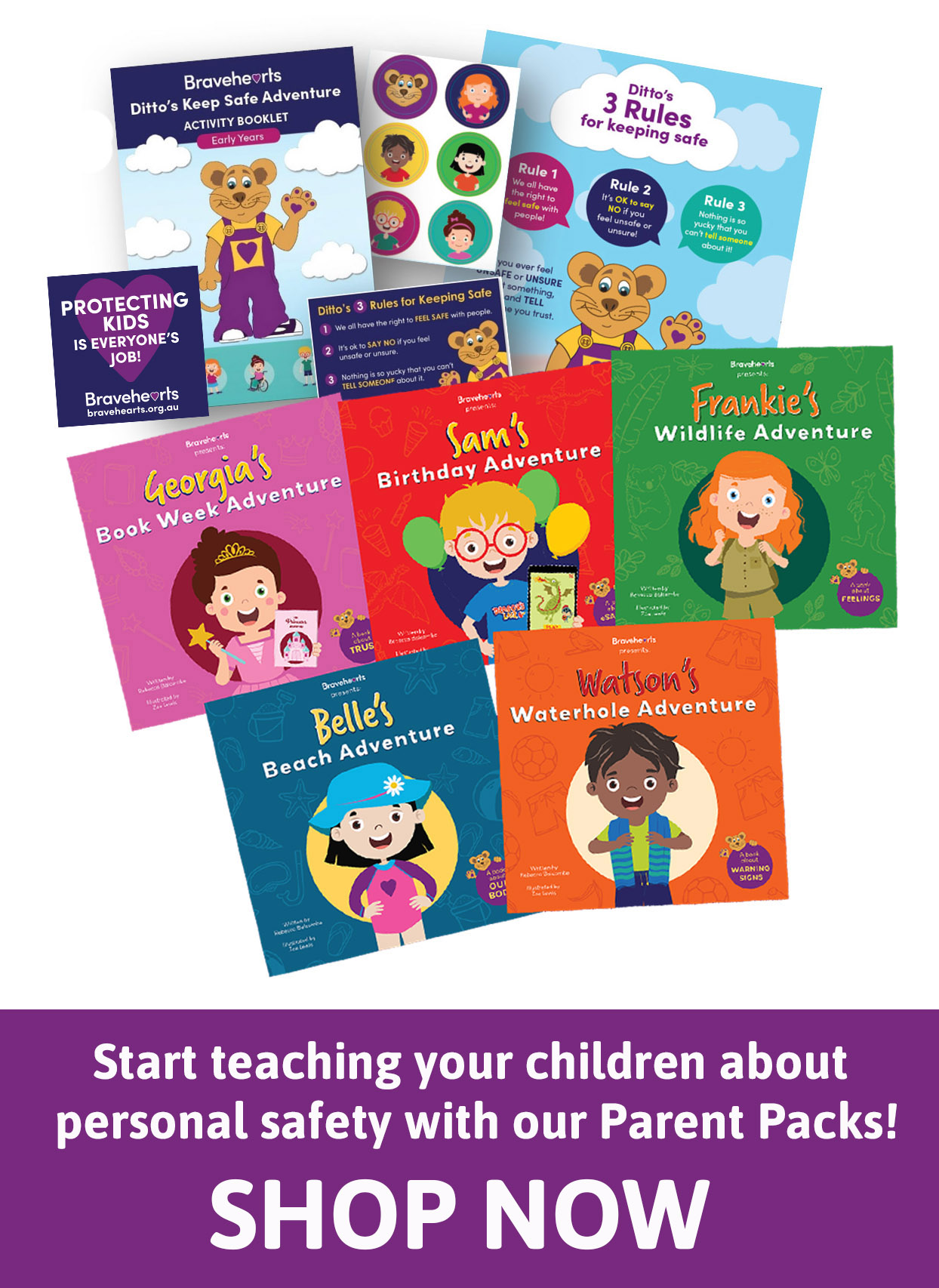
These personal safety principles underpin Ditto’s Keep Safe Adventure program, and are distilled into three simple ‘rules’ that are easy for children to remember and for parents, educators and carers to reiterate:
Rule 1) We all have the right to feel safe with people.
This rule teaches children and young people that they have the right to feel safe and secure where they live, play, and learn, and that no one has the right to make them do something that makes them feel unsafe or unsure.
Rule 2) It’s OK to say ‘NO’ if you feel unsafe or unsure.
This rule teaches children and young people that it is OK to stand up for themselves and to be assertive if something doesn’t feel right.
Rule 3) Nothing is so yucky that you can’t tell someone about it.
One of the reasons that children and young people fail to disclose harm is because they are afraid of getting into trouble. This rule helps to encourage them to speak to a trusted adult, even if something seems scary or terrible.
For 20 years, Ditto’s Keep Safe Adventure has been teaching Australian children these three rules, helping an entire generation of kids to understand their rights, listen to their feelings, and to speak out when they feel unsafe or unsure. Happy birthday Ditto!
To learn more about Ditto’s Keep Safe Adventure program, and to book a live incursion or purchase the digital program, go to https://bravehearts.org.au/education/dittos-keep-safe-adventure-program/dittos-keep-safe-adventure-show/